

Shiitake cultivation has gradually moved from small-scale production to large commercial operations. In modern mushroom farms, thousands of shiitake substrate blocks are prepared and sterilized every day before inoculation.
These substrate blocks are commonly referred to as shiitake logs or cultivation bags. They contain sawdust, nutrients, and moisture that provide ideal conditions for mushroom growth. However, these same nutrients also allow unwanted microorganisms to grow rapidly if the substrate is not properly sterilized.
For this reason, high-temperature sterilization is a critical step in shiitake production.
During sterilization, substrate blocks are placed inside large sterilization chambers where steam heat eliminates bacteria, molds, and competing fungi. When the process operates correctly, the substrate becomes a clean environment ready for shiitake mycelium colonization.
However, many commercial farms encounter operational problems during sterilization. One of the most common issues is the swelling or bursting of shiitake cultivation bags inside the sterilization chamber.
When this occurs, substrate material may leak, cultivation bags may rupture, and nearby logs can become contaminated. These problems reduce production efficiency and increase operational costs.
Understanding the technical reasons behind these issues is essential for improving sterilization reliability in modern mushroom farms.
Before sterilization begins, shiitake substrate must go through several preparation stages.
Typical preparation steps include:
mixing sawdust and nutrient additives
adjusting substrate moisture
filling plastic cultivation bags
compacting substrate into log shapes
Once the bags are sealed, they are transported to the sterilization area.
At this stage, the substrate is rich in organic material and contains natural microorganisms from raw ingredients. Without proper sterilization, these microorganisms will compete with shiitake mycelium and significantly reduce yields.
Therefore, substrate sterilization is essential for maintaining consistent mushroom production.
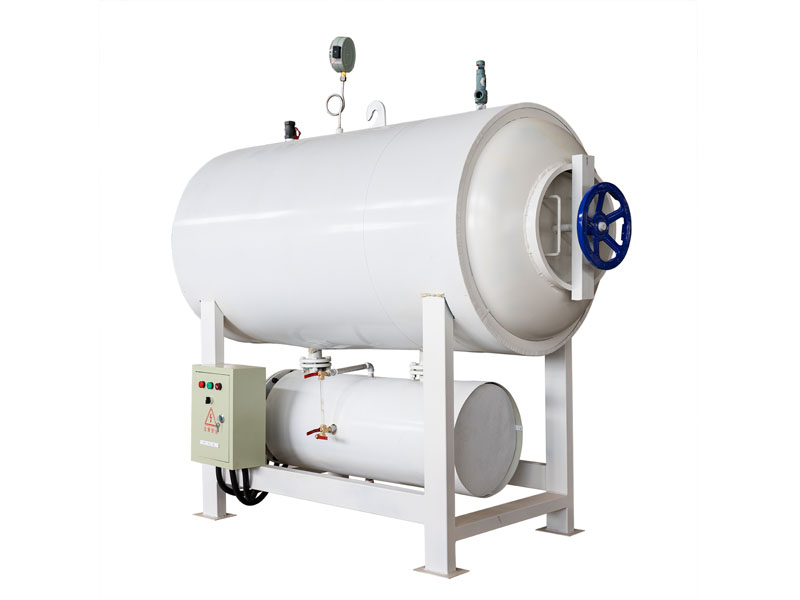
Modern commercial farms rely on specialized mushroom substrate sterilization systems designed to handle large volumes of cultivation bags.
These systems are typically equipped with:
insulated sterilization chambers
steam supply pipelines
pressure control devices
automated temperature monitoring
Together, these components create a controlled environment where steam heat can penetrate substrate blocks effectively.
When the sterilization system operates properly, steam distribution remains uniform throughout the chamber, allowing all substrate blocks to reach the required temperature.
However, if the sterilization process is not carefully controlled, pressure imbalance and rapid heating can cause cultivation bags to expand or rupture.
Bag swelling occurs when the internal pressure of a shiitake log becomes greater than the pressure outside the cultivation bag.
Inside each substrate block, water is present in the sawdust mixture. As the sterilization temperature rises above the boiling point, this water begins to convert into steam.
Steam expansion increases the internal pressure inside the bag.
If the pressure outside the bag does not increase at the same rate, the cultivation bag begins to expand.
This process may result in:
deformation of shiitake logs
stretching of plastic bags
weakening of bag material
If the pressure continues to rise, the bag may eventually burst.
One major cause of swelling is excessively rapid heating during the early sterilization stage.
When steam enters the chamber too quickly, the chamber temperature rises rapidly. Moisture inside the substrate begins to vaporize before external steam fully penetrates the log.
Several pressure changes occur simultaneously:
internal vapor pressure increases
air trapped inside the substrate expands
steam outside the bag has not yet stabilized
This imbalance causes the cultivation bag to expand outward.
Rapid heating is particularly risky when:
substrate moisture is high
sawdust particles are large
cultivation bags are tightly packed
In these situations, steam penetration becomes slower and pressure differences increase.
Another important factor affecting sterilization performance is steam circulation inside the chamber.
For proper sterilization, steam must flow freely around every cultivation bag.
If steam circulation is restricted, uneven heating occurs. Some areas of the chamber may reach sterilization temperature faster than others.
This uneven heating creates pressure differences between substrate blocks.
Common causes of poor steam circulation include:
overloading the sterilization chamber
stacking cultivation bags too closely
blocking steam pathways
Proper loading patterns are essential for maintaining uniform heating conditions.
Pressure control is equally important during the cooling phase.
After the sterilization cycle ends, the chamber pressure must be released gradually.
If pressure is released too quickly, the pressure outside the bag drops rapidly while internal vapor pressure remains high.
This creates a strong outward force on the cultivation bag.
The result may be:
sudden expansion of shiitake logs
rupture of plastic cultivation bags
substrate leakage inside the chamber
Controlled pressure release allows internal and external pressure to equalize slowly.
The quality of cultivation bags also influences sterilization stability.
Shiitake cultivation bags must withstand:
high sterilization temperatures
internal vapor pressure
long sterilization durations
If the plastic material softens under heat, its strength decreases.
Low-quality bags may begin to stretch or tear when pressure increases inside the substrate block.
For this reason, commercial farms should choose bags specifically designed for high-temperature mushroom substrate sterilization.
Proper loading of substrate blocks helps maintain stable sterilization conditions.
Operators should follow several loading guidelines:
leave small gaps between cultivation bags
avoid stacking bags too tightly
distribute substrate evenly throughout the chamber
These practices allow steam to circulate freely around the substrate logs.
Better steam circulation improves temperature uniformity and reduces pressure differences between substrate blocks.
Gradual heating is one of the most effective ways to prevent shiitake log swelling.
During the early stage of sterilization, the chamber temperature should rise slowly from room temperature until it approaches boiling temperature.
A slow heating phase allows:
air trapped inside substrate bags to escape
steam to penetrate substrate evenly
internal moisture to vaporize gradually
In many commercial operations, the heating stage to approximately 100°C typically takes between one and three hours depending on chamber size.
Once the target sterilization temperature is reached, the system enters the holding stage.
During this phase, the sterilization system must maintain stable pressure and temperature conditions.
Two common sterilization approaches are used in shiitake cultivation.
The first is micro-pressure sterilization, which uses slightly lower temperatures for longer periods.
The second is high-pressure sterilization, which uses higher temperatures but shorter sterilization times.
Both approaches can be effective when properly controlled.
Advanced sterilization equipment offers several operational advantages for commercial mushroom farms.
These systems provide:
accurate temperature control
stable pressure regulation
uniform steam distribution
programmable sterilization cycles
With automated control systems, operators can manage heating rates, pressure levels, and sterilization duration more precisely.
This reduces the risk of bag swelling and improves sterilization consistency.
Reliable sterilization processes play an important role in improving overall farm productivity.
When sterilization runs smoothly:
substrate losses are minimized
contamination risk decreases
labor efficiency improves
production schedules remain stable
For large mushroom farms producing thousands of substrate blocks daily, even small improvements in sterilization performance can lead to significant economic benefits.
Regular monitoring helps ensure that sterilization equipment operates correctly.
Operators should check several parameters during each sterilization cycle.
Important indicators include:
chamber temperature stability
pressure consistency
heating speed
steam flow conditions
Accurate monitoring allows operators to detect irregular conditions early and make adjustments before problems occur.
To reduce sterilization problems, commercial shiitake farms can adopt several practical practices.
Recommended actions include:
maintain consistent substrate moisture levels
avoid overpacking cultivation bags
load sterilization chambers evenly
increase temperature gradually
release pressure slowly after sterilization
Following these operational guidelines helps maintain stable pressure balance throughout the sterilization cycle.
As the global mushroom industry continues to grow, sterilization technology is becoming more advanced.
Many modern farms are adopting automated sterilization systems that integrate temperature control, pressure monitoring, and programmable cycles.
These systems allow farms to process large quantities of substrate while maintaining consistent sterilization conditions.
With improved technology and better process management, commercial shiitake farms can significantly reduce the risk of cultivation bag swelling and bursting.
Swelling or bursting of shiitake cultivation bags during sterilization is usually caused by pressure imbalance, rapid heating, or uneven steam circulation.
By improving heating control, optimizing chamber loading, and using reliable mushroom substrate sterilization systems, commercial farms can greatly reduce these problems.
Stable sterilization processes not only protect substrate quality but also support efficient and consistent shiitake mushroom production.
Is one professional company integrating consulting, planning, design, construction, technical services and investment in the mushroom factory.
We has technical department, R&D department, investment department, engineering department, purchasing department, design department, quality control department, finance department and marketing department. It has dozens of OEM production workshops. Satrise’s products include bag filling line, bottle filling line, bed planting production line, sterilization equipment, boiler equipment, purification equipment, liquid spawn production equipment, environmental control equipment and various consumable products.
Over the years, Satrise people have actively explored the international marke and have provided mushroom production line and technical supportsuccessively for more than 100 countries and regions, such as Russia, the United States, Canada, South Korea, France, Germany, Spain, Australia, Malaysia, Thailand, and so on. Its products have been widely recognized by customers.
Please Leave your message you want to know! We will respond to your inquiry within 24 hours!
Product Category