

Contamination is the biggest hidden cost in industrial mushroom production.
For large-scale mushroom farms, even a small rise in contamination rate can quickly translate into lower yields, unstable delivery schedules, and higher operating costs.
Unlike small or traditional farms, industrial mushroom production relies heavily on standardized equipment, controlled environments, and repeatable processes. When contamination becomes frequent, the root cause is often not poor management, but limitations in equipment capacity, system configuration, or process design.
This article analyzes five major contamination risks in industrial mushroom production from a product- and equipment-focused perspective, and explains how proper equipment selection plays a critical role in long-term mushroom contamination control.
Sterilization failure remains the most common and costly cause of substrate contamination in industrial mushroom farms.
In many cases, farms follow correct operating procedures, yet contamination persists because the sterilization system itself cannot meet the actual production load.
Common sterilization failure causes include:
Insufficient holding time in the autoclave sterilization cycle
Excessive chamber loading that blocks steam circulation
Inconsistent temperature distribution inside dense substrates
Lack of monitoring at the coldest point of the substrate
Many farms rely mainly on pressure readings. However, pressure alone does not guarantee sterilization.
True sterilization depends on achieving adequate thermal penetration throughout the substrate.
The F0 value represents the cumulative lethal heat effect over time at the coldest location.
If the target F0 value is not reached:
Microorganisms survive inside the substrate core
Contamination appears several days after inoculation
Problems are often misdiagnosed as inoculation or spawn issues
This is why sterilization problems often seem random but repeat batch after batch.
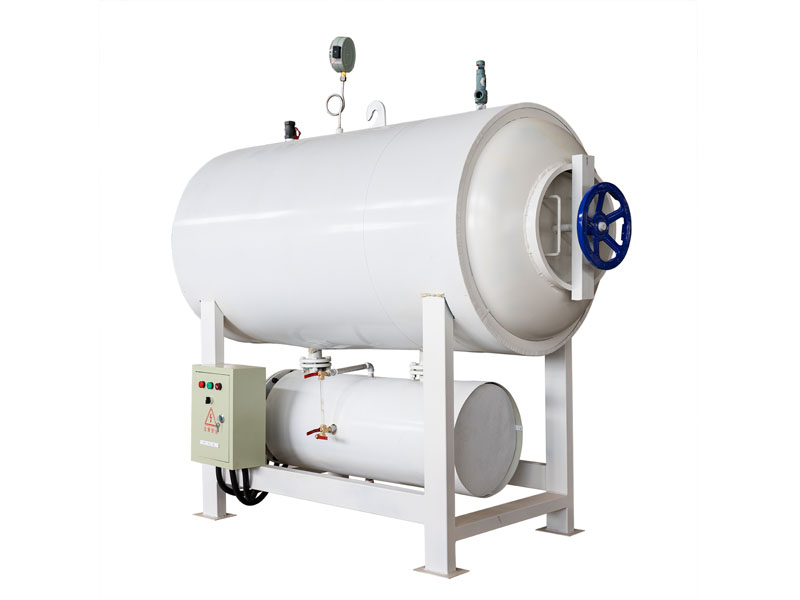
A properly designed industrial mushroom autoclave supports effective mushroom contamination control by offering:
Uniform steam distribution across the entire chamber
Stable pressure and temperature control
Programmable sterilization cycles for different substrates
Ports for validating internal temperature and F0 values
Matching autoclave capacity to real production demand is essential for reducing substrate contamination at scale.
After sterilization, inoculation is the next critical control point where contamination often occurs.
Even well-sterilized substrates can be quickly contaminated if inoculation rooms fail to maintain proper hygiene conditions.
Common weaknesses include:
Declining HEPA filtration efficiency over time
Improper airflow direction within the room
Unstable or negative room pressure
Frequent door opening without buffer zones
These issues often go unnoticed because the room still appears visually clean.
High-quality HEPA filters are only effective when:
Correctly sized for airflow volume
Properly installed and sealed
Maintained and replaced on schedule
If filtration efficiency drops, airborne spores easily enter the inoculation zone, increasing contamination risk.
A positive pressure cleanroom ensures that clean air flows outward when doors open.
This pressure barrier prevents contaminated air from entering during routine operations.
For industrial mushroom farms, positive pressure is not an upgrade—it is a requirement for meeting modern mushroom farm hygiene standards.
As production capacity increases, human involvement becomes one of the most significant contamination factors.
No matter how well trained, people introduce microorganisms into the production environment.
Manual operations contribute to contamination through:
Direct contact with sterile materials
Airborne particles from breathing and movement
Inconsistent handling between operators
As labor input increases, contamination risk grows disproportionately.
Reducing human contact is one of the most effective strategies for mushroom contamination control.
Automation helps by:
Standardizing critical processes
Limiting exposure of sterile substrates
Reducing operator-dependent variability
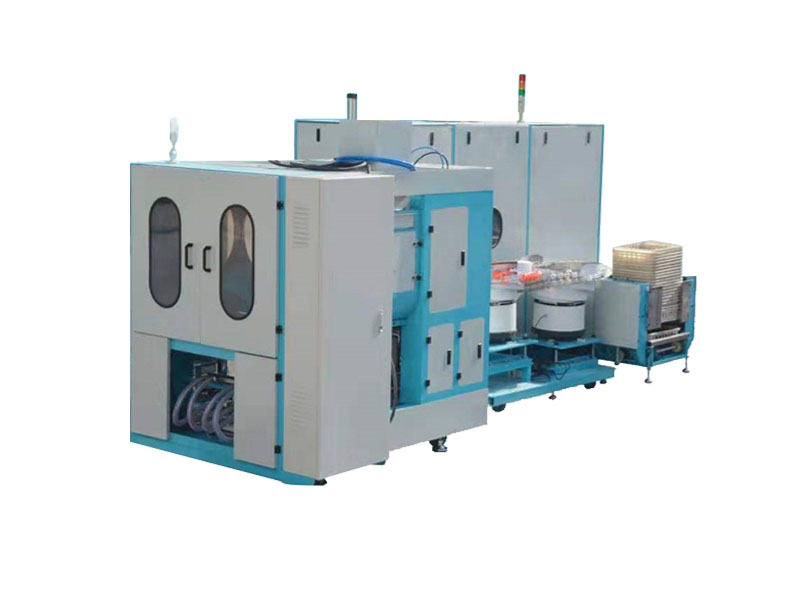
An automated inoculation line:
Performs inoculation in a sealed environment
Maintains consistent inoculation timing and volume
Reduces direct human contact with sterile materials
For many industrial mushroom farms, automation delivers immediate improvements in contamination rate and long-term gains in labor efficiency.
Contamination risks often begin upstream, before sterilization even starts.
High microbial loads in raw materials increase pressure on sterilization systems and reduce overall process reliability.
Common issues include:
Poorly stored sawdust or agricultural waste
Inconsistent moisture distribution during mixing
Long delays between mixing and sterilization
Cross-contact between raw and sterilized materials
These problems significantly reduce sterilization effectiveness.
Pre-sterilization equipment should support:
Uniform mixing and moisture control
Efficient material transfer to sterilization
Physical separation between raw and clean zones
Reducing microbial load before sterilization improves the performance of downstream equipment and lowers contamination risk.
Even when sterilization and inoculation are successful, environmental instability can trigger secondary contamination.
Mycelium under stress becomes more vulnerable to competitor organisms.
Key risk factors include:
Temperature swings that slow mycelial growth
Excess humidity without proper airflow
Poor CO₂ control during incubation
These conditions often arise from outdated or manual control systems.
A smart climate control system supports contamination control by:
Maintaining stable temperature and humidity
Regulating airflow and CO₂ levels
Providing centralized monitoring and alarms
Environmental stability protects mycelial health and reduces opportunities for contamination to develop.
From a product perspective, contamination control depends on how well equipment systems work together.
An effective industrial setup typically integrates:
Industrial mushroom autoclaves with validated sterilization cycles
Cleanroom systems with stable HEPA filtration efficiency
Automated inoculation lines to limit human contact
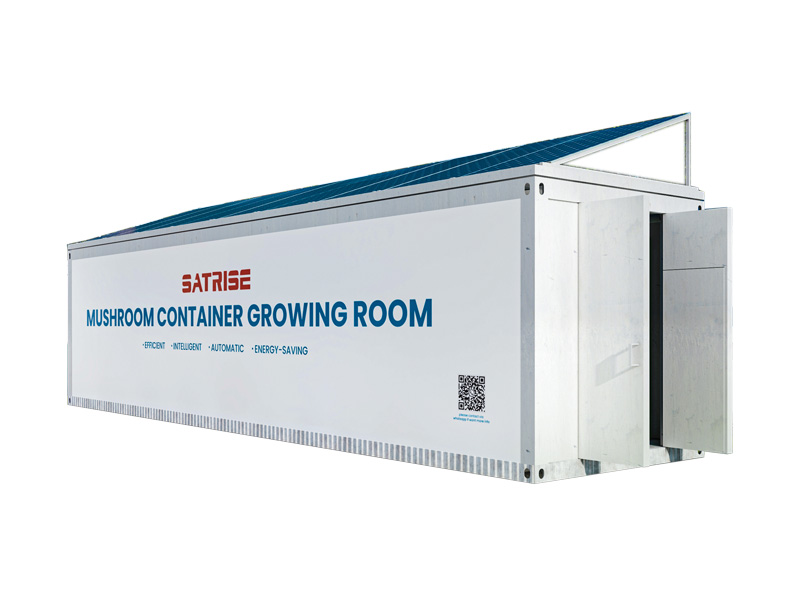
Smart climate control systems for incubation and fruiting
Each system reinforces the others, creating multiple barriers against contamination.
Industrial mushroom production is driven by system reliability, not isolated techniques.
Well-matched equipment systems:
Reduce contamination structurally rather than reactively
Improve batch-to-batch consistency
Lower long-term operating costs
Support future capacity expansion
In modern mushroom farming, contamination control is designed into the production line—not managed after problems appear.
Contamination is the biggest hidden cost in industrial mushroom production, but it is not unavoidable.
By addressing sterilization capacity, cleanroom performance, automation level, raw material handling, and environmental control through appropriate equipment selection, mushroom producers can significantly improve production stability and profitability.
For industrial-scale mushroom farms, the right equipment is not just a tool—it is the foundation of effective mushroom contamination control.
Is one professional company integrating consulting, planning, design, construction, technical services and investment in the mushroom factory.
We has technical department, R&D department, investment department, engineering department, purchasing department, design department, quality control department, finance department and marketing department. It has dozens of OEM production workshops. Satrise’s products include bag filling line, bottle filling line, bed planting production line, sterilization equipment, boiler equipment, purification equipment, liquid spawn production equipment, environmental control equipment and various consumable products.
Over the years, Satrise people have actively explored the international marke and have provided mushroom production line and technical supportsuccessively for more than 100 countries and regions, such as Russia, the United States, Canada, South Korea, France, Germany, Spain, Australia, Malaysia, Thailand, and so on. Its products have been widely recognized by customers.
Please Leave your message you want to know! We will respond to your inquiry within 24 hours!
Product Category